We helped 75+ brands generate $1.56M+ in revenue. Average ROI: 240% in Year 1
Choosing a digital marketing agency in Houston can feel harder than it should.
You will find agencies offering SEO, Google Ads, social media, web design, content, email marketing, and almost every other digital service you can name. On paper, many of them look similar.
But the real question is not:
“Which agency offers the most services?”
It is:
“Which agency can turn my marketing budget into measurable business results?”
That distinction matters.
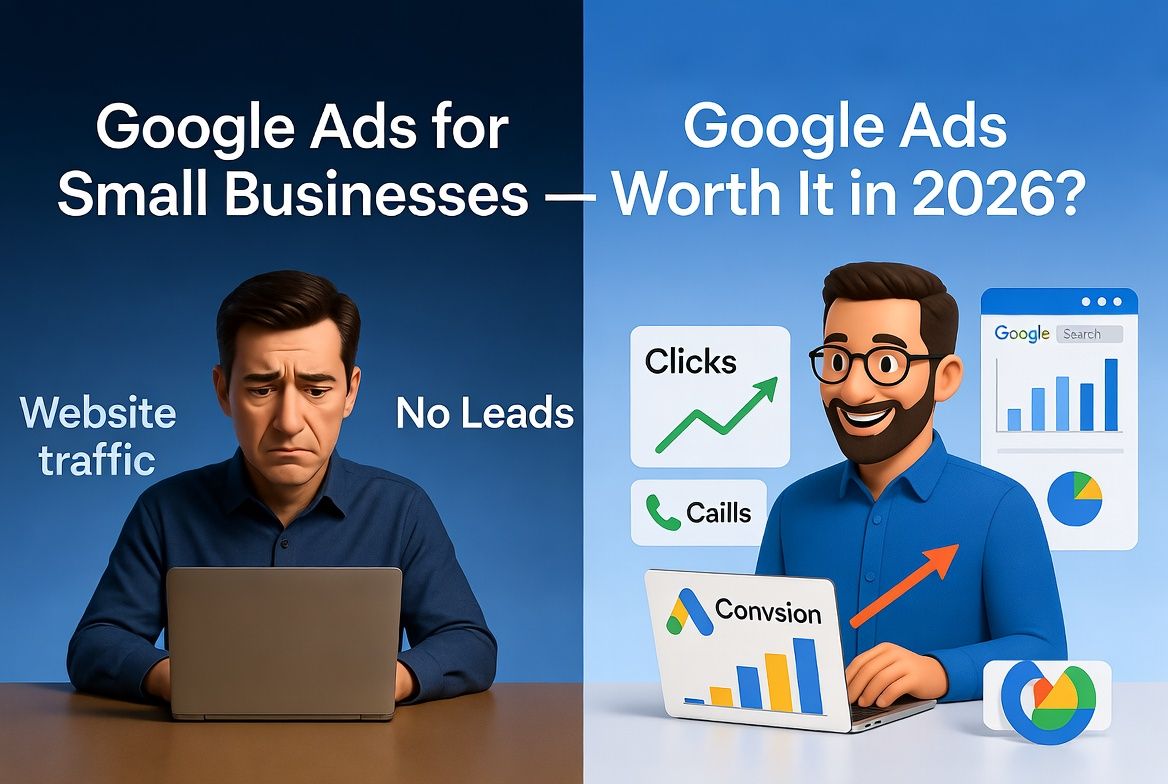
A business can receive thousands of website visitors and still generate very few leads. A Google Ads campaign can produce plenty of clicks without producing profitable customers. A social media account can grow its following while revenue stays flat.
The right digital marketing agency in Houston should look at the complete system: your audience, offer, website, traffic sources, tracking, conversion process, and revenue goals.
That is the approach AheadTech360 takes with its clients: strategy → execution → measurement → optimization → business results.
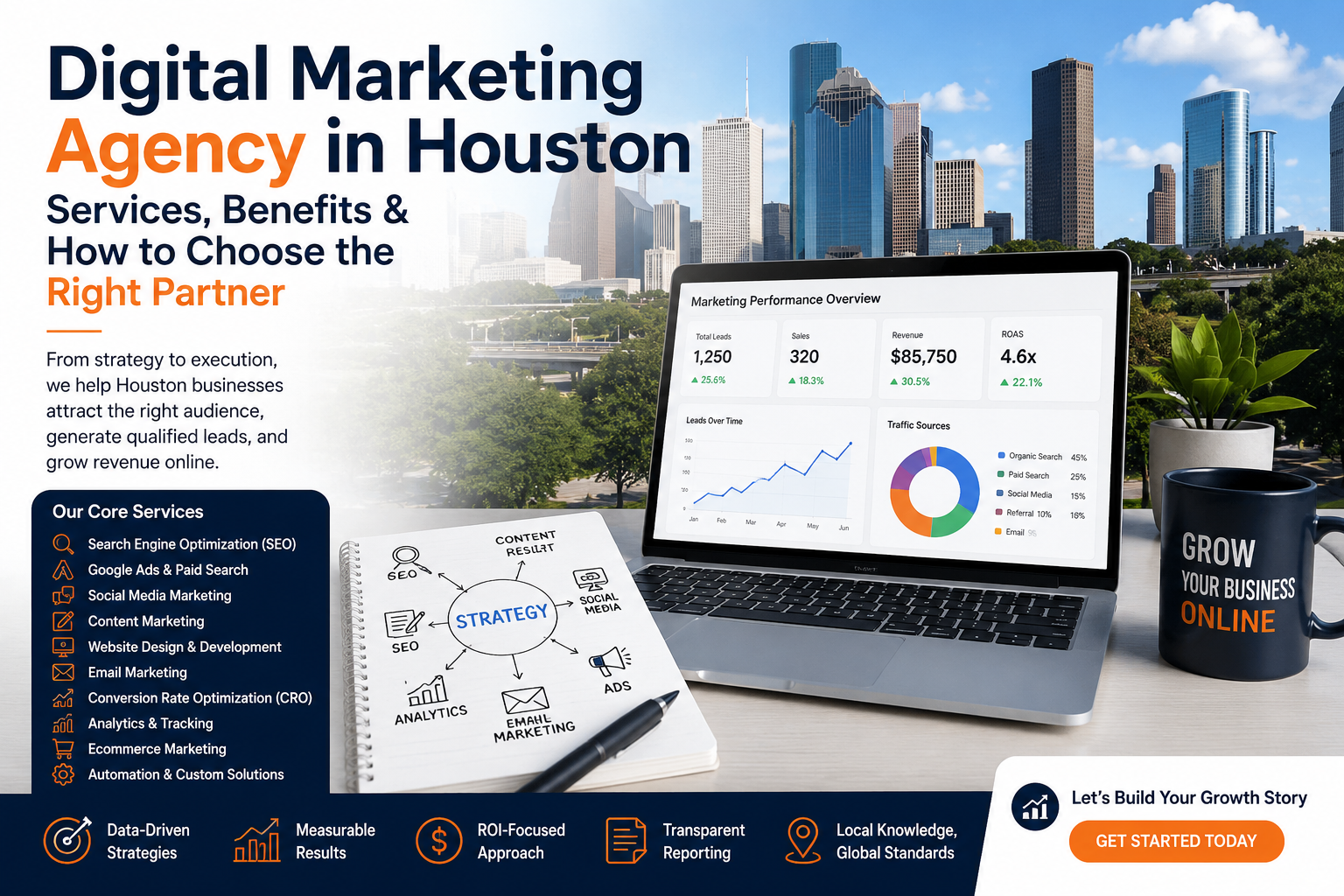
A digital marketing agency in Houston helps businesses attract potential customers online, convert them into leads or customers, and improve the performance of their digital marketing channels.
Depending on the business, services may include:
Search engine optimization (SEO)
Google Ads and paid search
Meta Ads
Social media marketing
Content production
Email marketing
Website design and development
Conversion rate optimization (CRO)
Ecommerce marketing
Analytics and tracking
Custom technology and automation
However, services alone do not determine whether an agency is a good fit.
The better question is whether the agency can connect those services to measurable outcomes such as qualified leads, sales, revenue, customer acquisition cost, conversion rate, or return on ad spend.
A strong marketing partner should be able to explain:
If an agency cannot clearly explain these things, more marketing activity may not solve the underlying problem.
There is no universal marketing package that works for every Houston business.
A local service company may need Local SEO and Google Ads. An ecommerce brand may need SEO, paid advertising, CRO, email marketing, and creative testing. A B2B company may need search visibility, content, lead generation, and a better website.
Here are the core services businesses commonly use.
SEO helps your business appear when potential customers search Google for products, services, answers, or businesses related to what you offer.
For a Houston business, SEO can involve:
Keyword research
Search intent analysis
On-page SEO
Technical SEO
Local SEO
Content strategy
Internal linking
Digital PR and link building
Google Business Profile optimization
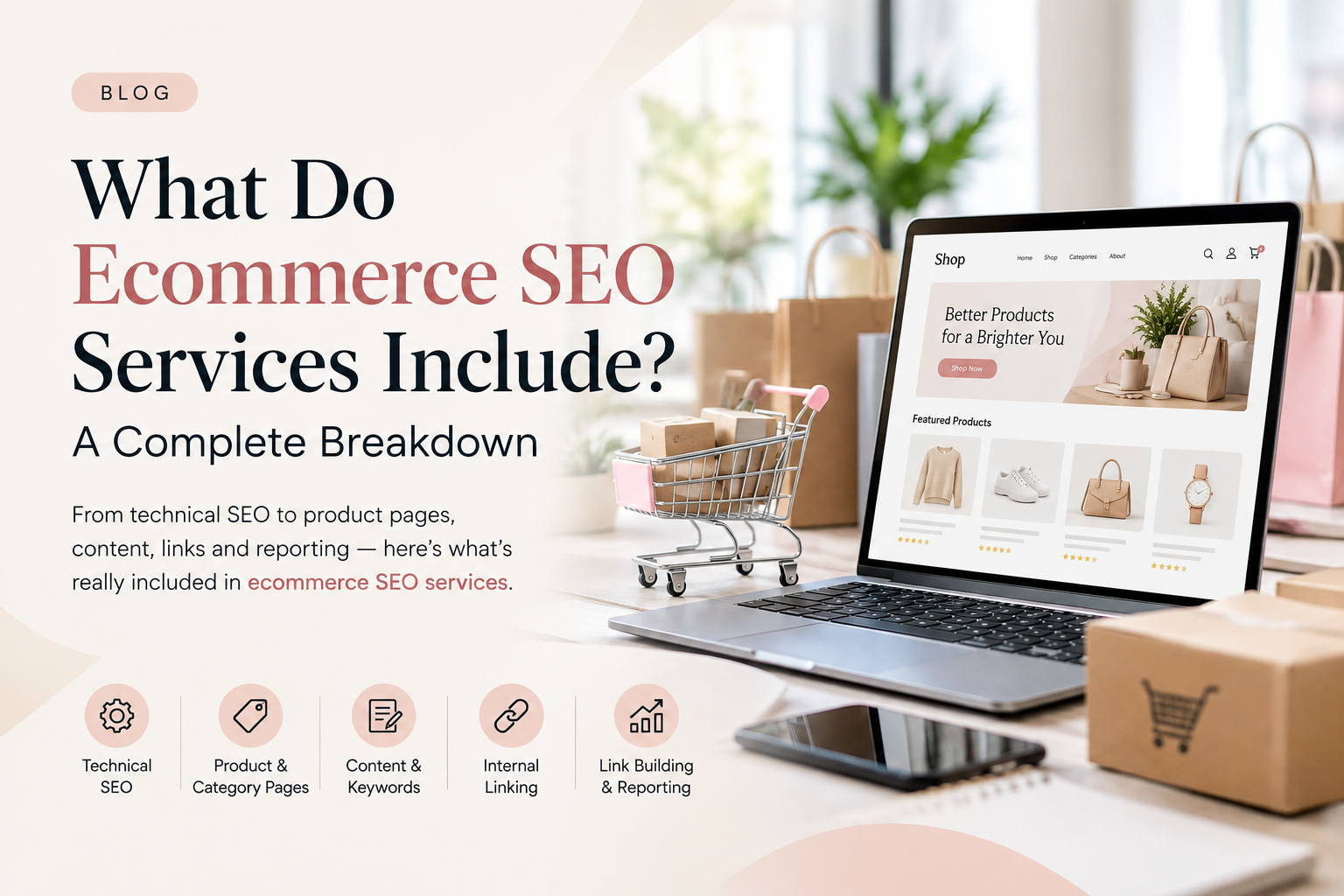
Ecommerce SEO
Conversion-focused landing pages
But ranking should not be the only objective.
A keyword ranking that generates irrelevant traffic is not necessarily valuable.
The better goal is to attract qualified organic traffic that can contribute to leads, sales, or revenue.
A Houston plumbing company does not simply need to rank for “plumber.”
It may need visibility for searches related to:
Emergency plumbing
Water heater repair
Drain cleaning
Commercial plumbing
Plumbing services near specific Houston areas
The strategy should connect search intent with the services the business actually wants to sell.
One of the biggest SEO mistakes businesses make is treating traffic as the final goal.
Traffic is an input. Revenue is the outcome.
Before increasing organic traffic, determine whether the traffic you are attracting has a realistic path to becoming a customer.
If the wrong keywords are bringing visitors who never buy, getting more of that traffic will not fix the problem.
The solution: build SEO around search intent, qualified traffic, conversion opportunities, and business value—not rankings alone.
SEO can take time to build. Paid search can put your business in front of people who are actively searching for a solution.
Google Ads can be useful when you need to:
Generate leads
Promote specific services
Reach high-intent searchers
Test offers
Drive ecommerce purchases
Retarget potential customers
Expand into new markets
But simply launching campaigns is not enough.
You also need:
Targeting → Ad → Landing Page → Tracking → Conversion → Optimization
If one part breaks, the entire campaign can become expensive.
For example, an ad can have a strong click-through rate but poor conversion because the landing page does not answer the customer's question or make the next step clear.
A useful paid advertising analysis should look beyond:
Clicks → Impressions → CTR
and examine:
Qualified clicks → Leads → Sales → Revenue → CAC/CPA → ROAS
The right metric depends on the business model.
3. Meta Ads and Paid Social
Meta Ads can help businesses reach customers on platforms such as Facebook and Instagram.
They can be especially useful for:
Ecommerce
Consumer products
Fashion
Fitness
Lifestyle brands
Local services
Retargeting
Brand discovery
But paid social has a different dynamic from search advertising.
Someone searching Google for “buy running shoes” has already expressed purchase intent.
Someone scrolling Instagram may not be actively looking for your product.
That means the creative, offer, message, audience, and landing experience matter heavily.
A strong Meta strategy often requires continuous creative testing.
Different:
Hooks
Offers
Creatives
UGC concepts
Headlines
Audiences
Landing pages
can produce very different results.
If a Meta campaign is producing clicks but sales are declining, the answer is not automatically “increase the budget.”
First ask:
Is the audience wrong, is the creative tired, is the offer weak, or is the website losing the customer?
Increasing spend before identifying the problem can simply increase the amount of money being lost.
4. Conversion Rate Optimization (CRO)
CRO is often overlooked when businesses talk about digital marketing.
But consider this:
You can spend more money getting visitors to your website—or you can improve the percentage of visitors who actually convert.
CRO focuses on improving the experience after someone arrives.
This can include:
Landing page optimization
Product page optimization
Checkout improvements
Form optimization
Mobile UX
Call-to-action testing
A/B testing
Heatmaps
Session recordings
Funnel analysis
User behavior analysis
Imagine a website receives 10,000 visitors.
If 1% convert, that produces 100 conversions.
If the same traffic converts at 2%, that produces 200 conversions.
You did not necessarily need twice as much traffic.
You improved the performance of the traffic you already had.
When a business says, “Our ads aren't working,” we don't think the investigation should stop inside the ad account.
The real problem may be:
Ad → Offer → Landing Page → Product/Service → Checkout/Form → Follow-up
Marketing performance is a system.
If one part of the system is leaking, fixing only the traffic source may not solve the problem.
Content is not just about publishing blog posts.
Modern businesses may need:
Blog content
Product photography
UGC
Video ads
Short-form videos
VSLs
Motion graphics
Landing page content
Product descriptions
Social content
The purpose should be clear.
A piece of content can build awareness, answer a question, support SEO, explain a product, or help an advertisement convert.
The format should follow the objective.
For example, an ecommerce brand may need product-focused video creatives for paid social, while a B2B company may need detailed educational content that supports search visibility and lead generation.
Getting a customer is only one part of growth.
Keeping that customer engaged can also create significant business value.
Email marketing can support:
Welcome sequences
Abandoned cart recovery
Product recommendations
Promotional campaigns
Customer education
Win-back campaigns
Retention
Repeat purchases
For ecommerce businesses especially, email can help turn a one-time transaction into a longer customer relationship.
The important point is that email should not be measured only by open rates.
Look at metrics that connect to the business, such as:
Revenue
Conversion rate
Repeat purchases
Customer retention
Revenue per recipient
Your website is often the place where marketing traffic becomes a business outcome.
That makes website development part of marketing—not something completely separate from it.
A website may need to support:
SEO
Paid advertising
Ecommerce
Lead generation
CRO
Analytics
Mobile users
Integrations
Speed
Content management
AheadTech360 works with platforms including Shopify and WordPress and also builds custom websites and technology solutions where a standard platform is not enough.
A business can have excellent ads and still lose customers because:
More traffic will not automatically fix these problems.
Social media can help businesses build visibility, trust, engagement, and a stronger relationship with their audience.
Depending on the business, social media work can include:
Content planning
Creative production
Posting
Community engagement
Short-form video
Paid social
Content strategy
Brand communication
But follower count should not automatically be treated as the definition of success.
For a business, social media may be valuable because it:
Builds familiarity
Supports paid advertising
Answers customer questions
Demonstrates products
Builds trust
Creates demand
Supports conversions
The right metrics depend on what the business is trying to accomplish.
Houston Digital Marketing Should Be Local in Strategy, Not Just in the Keyword
Adding “Houston” to an agency's website does not automatically make its strategy local.
A genuinely useful local strategy should understand:
The market you serve
Your service area
Your customer intent
Local search behavior
Competition
Neighborhood or service-area differences where relevant
Local landing pages
Google Business Profile
Local reviews
Location-specific conversion opportunities
For example, a business serving Houston, Katy, Sugar Land, The Woodlands, or nearby communities may need different location targeting depending on its actual service area.
The key is to build local relevance around the business—not simply repeat city names throughout a page.
Local SEO is not:
“Put Houston in every heading.”
Local SEO is:
Relevant service + relevant location + useful information + trust + strong conversion path.
If a page only swaps the city name while the content stays identical, it is unlikely to provide much additional value to the user.
How AheadTech360 Approaches Digital Marketing
AheadTech360 takes a results-oriented approach to digital marketing.
Instead of treating SEO, advertising, websites, content, email, and social media as isolated activities, the goal is to understand how each part contributes to the larger growth system.
AheadTech360's current service offering includes:
Google and Meta Ads
SEO
Content production
Email marketing
Website development
Social media
Mobile app development
Custom technology systems
The company's positioning is simple:
“We make your marketing make money.”
That means the focus is not simply on doing more marketing.
It is on finding what is not working, fixing the biggest problems first, testing improvements, and scaling what produces better business outcomes.
AheadTech360's process starts with an audit of areas such as ads, website, tracking, and competitors before moving into implementation and ongoing optimization.
You do not always need more marketing.
Sometimes you need to fix the marketing you already have.
Before increasing ad spend, publishing dozens of new pages, or launching another social channel, find the biggest bottleneck.
Fix the leak before you pour more traffic into the bucket.
Choosing a digital marketing agency in Houston should not be a competition over who offers the longest service list.
The right partner should help you answer five questions:
Where are we now?
What is holding growth back?
What should we fix first?
How will we measure improvement?
How does the work contribute to revenue?
That is the difference between buying marketing services and building a marketing system.
If your current marketing generates traffic but you are not sure where the revenue is being lost, the first step may not be another campaign.
It may be an honest look at what is already happening.