We helped 75+ brands generate $1.56M+ in revenue. Average ROI: 240% in Year 1
Here's something most small business owners don't realize: you can write the best blog content in your industry, build hundreds of backlinks, and still struggle to rank — because your website has technical problems that stop Google from crawling, reading, and trusting your site properly.
Technical SEO is the foundation everything else is built on. It's not glamorous. Nobody gets excited talking about XML sitemaps or canonical tags. But fixing technical issues is often the fastest path to ranking improvements — because these are problems Google explicitly tells you about, and fixing them removes barriers that are actively holding your site back.
This checklist covers every critical technical SEO issue your small business website should address in 2025. It's written in plain English, organized by category, and includes priority ratings and free tools to check each item yourself.
You don't need to be a developer to understand this list — but you do need to act on it. Most small business websites have at least 5–10 fixable issues on this list right now.
At AheadTech360, technical SEO is the first thing we fix when we take on a new client — before we write a single piece of content or build a single backlink. The reason is simple: if Google can't properly crawl and index your site, none of the other work matters. We routinely find 8–15 technical issues on first audit, many of which have been silently hurting rankings for months or years.
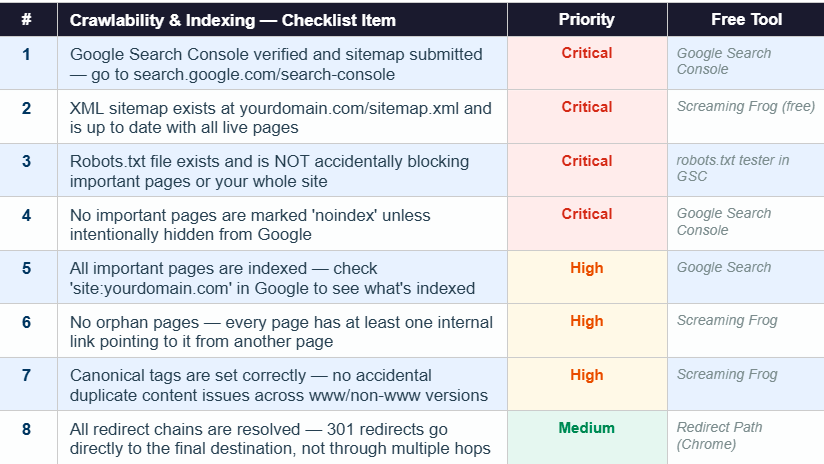
Can Google find and read every page on your site?
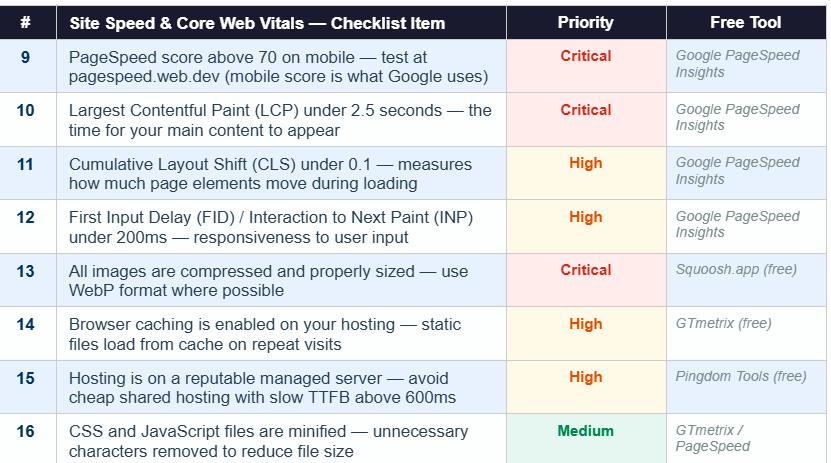
Fast sites rank better. Google measures load performance.
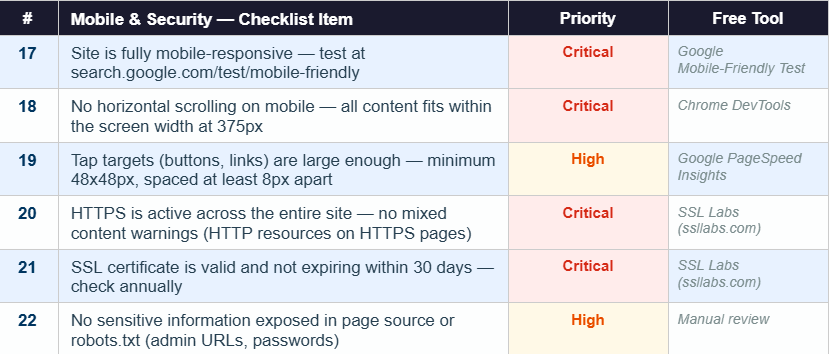
Google indexes mobile-first. HTTPS is a confirmed ranking signal.
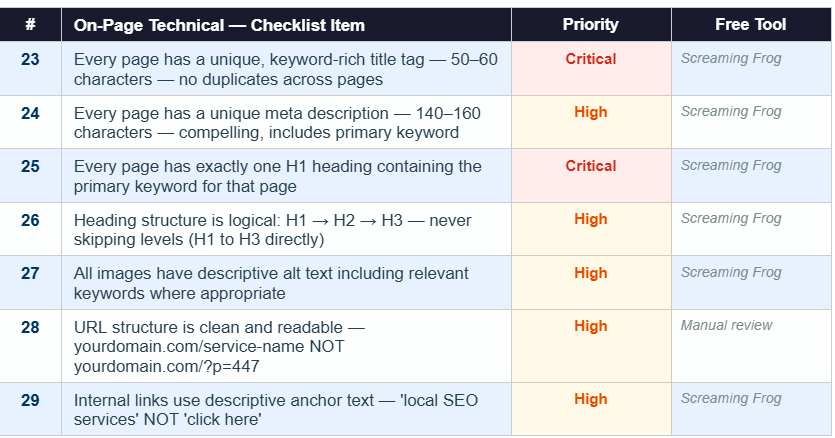
Correct implementation of meta tags, headings, and structured data.
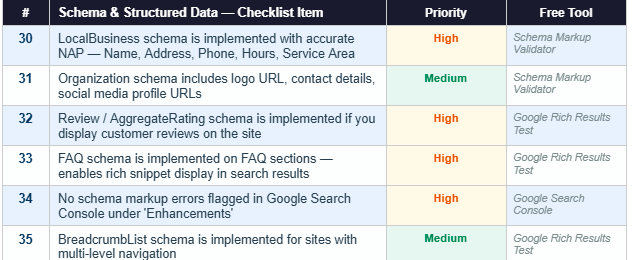
Help Google understand exactly what your business is and where it operates.
he fastest way to find your most critical technical SEO issues right now: open Google Search Console, go to 'Coverage,' and look at the list of errors and warnings. Every item in the 'Error' column is a page Google cannot index — these represent ranking opportunities you're completely missing. Fix errors first, then warnings, then notices. Most small business websites have at least 3–8 indexing errors that can be resolved in a single afternoon.
Google's AI Overview and other AI search tools like ChatGPT and Perplexity increasingly pull answers from websites with strong technical foundations. Sites with proper schema markup (especially FAQ and LocalBusiness schema), fast load times, and clean indexing are cited by AI tools far more frequently than technically weak sites with the same content quality. Technical SEO in 2025 is not just about Google's traditional ranking algorithm — it's about being readable and trustworthy to the AI systems that now answer millions of queries directly.
Technical SEO is not optional for small business websites that want to rank in 2025. It's the foundation that determines whether all your other SEO work — your content, your Google Business Profile, your backlinks — actually converts into rankings and traffic.
The good news: most of the items on this checklist are one-time fixes that stay fixed. Once your sitemap is submitted, your SSL is active, your schema is implemented, and your Core Web Vitals pass — you don't need to redo those things every month. You're building a technically sound foundation that compounds your other SEO efforts rather than working against them.
Start with the Critical items. Fix one category per week. Eight weeks from now, your site will be technically stronger than the vast majority of your local competitors.